
Sermon May 3, 2026
John 14:1-14

For the last few days, I’ve been thinking a lot about dwelling places.
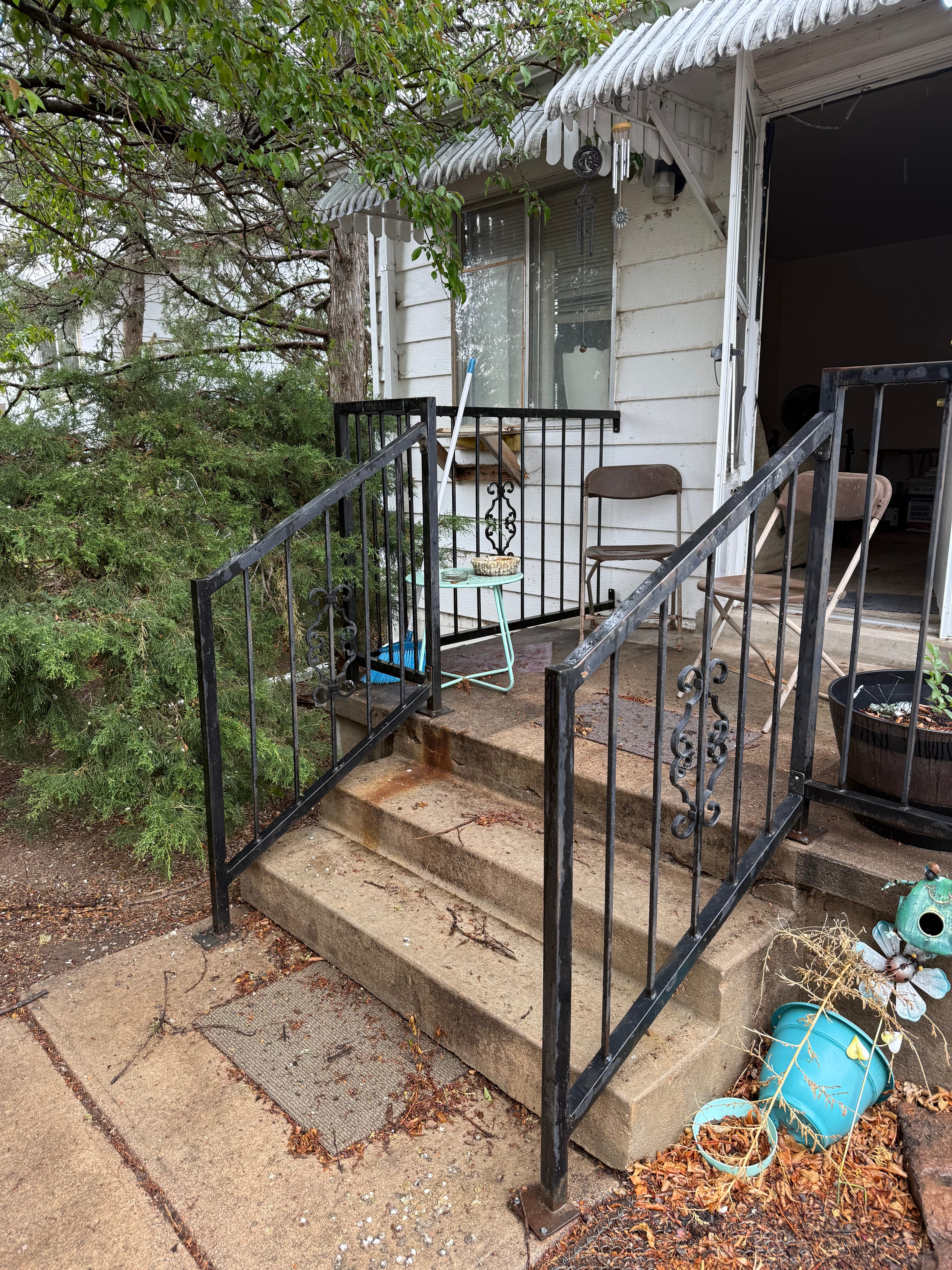
As we’ve been working on the house next door, clearing out the belongings of someone who is no longer with us, pulling up carpet, painting walls, and slowly preparing the space for what comes next, I have found myself thinking about the memories those walls hold.
A house is never just a house.
It holds laughter and grief, ordinary routines and sacred moments, meals cooked, prayers whispered, arguments had, holidays celebrated, lives lived. I never knew Alice or Alecia, but in sorting through what they left behind, I feel as though I have been given a glimpse into who they were and what mattered to them. The things we keep, the things we hang on walls, the marks left behind by furniture and footsteps and years of living — all of it tells a story.
And perhaps that is why Jesus’ words have stayed with me this week:
“In my Father’s house there are many dwelling places.”
Jesus says this to his disciples on the night before he dies. Their hearts are troubled. They are afraid. They know something is changing, but they do not yet understand what. Jesus has washed their feet. Judas has gone out into the night. Peter’s denial has been foretold. Jesus has told them he is going away.
So when Jesus says, “Do not let your hearts be troubled,” it is not because there is nothing troubling happening. There is plenty.
And in the middle of all that fear, Jesus speaks of a house.
A place with room.
A place prepared.
A place where they belong.
Not a cold, empty space. Not a generic shelter. A dwelling place.
A place where life is held. A place where memory is gathered. A place where love has made room.
Then Jesus says, “And you know the way to the place where I am going.”
And Thomas says what maybe everyone else is thinking:
“Lord, we do not know where you are going. How can we know the way?”
Thomas has gotten a reputation. We call him Doubting Thomas. We remember him as the disciple who needed proof. But here, Thomas is not being stubborn or cynical. Thomas is being honest.
“Lord, we do not know where you are going. How can we know the way?”
That is not faithlessness. That is a prayer.
It is the prayer of anyone who has ever looked at God and said, “I want to follow you, but I cannot see the path.” It is the prayer of anyone who has ever stood in an empty house, surrounded by the traces of a life that has ended, and wondered what comes next. It is the prayer of anyone who has ever stood at a graveside, or in a season of change, or at the edge of a calling, and said, “God, I do not know where this is going.”
And Jesus answers:
“I am the way, and the truth, and the life.”
Not “I will give you a map.”
Not “I will explain every step.”
But: “I am the way.”
The way is not first a set of directions. The way is a person. The way is Jesus himself.
And then Philip speaks.
“Lord, show us the Father, and we will be satisfied.”
And really, is that so different from Thomas?
Thomas wants direction. Philip wants vision. Thomas wants the way made clear. Philip wants God made obvious.
And yet we mostly pick on Thomas.
But Philip has been with Jesus too. He has seen the signs. He has heard the teaching. He has watched Jesus feed the hungry, heal the sick, welcome the outcast, and wash the feet of his friends. And still he says, “Show us the Father.”
In other words: “Jesus, could you make God a little more visible? Could you give us something we can hold onto?”
That sounds like doubt.
Or maybe better: it sounds like longing.
And maybe that is where we have misunderstood Thomas, and Philip, and ourselves.
We often talk about doubt as if it is the opposite of faith. As if faith means certainty, and doubt means failure. But in John’s Gospel, the disciples’ questions become places where Jesus reveals more of himself.
Thomas asks, “How can we know the way?”
And Jesus says, “I am the way, and the truth, and the life.”
Philip says, “Show us the Father.”
And Jesus says, “Whoever has seen me has seen the Father.”
Their questions do not drive Jesus away. Their questions draw out the promise.
That matters because sometimes the church has not been very gentle with questions. Sometimes people have learned to hide their doubts because they are afraid of being judged, corrected, or labeled.
But Jesus does not shame Thomas for asking. He does not abandon Philip for not yet seeing. He meets them where they are.
Jesus does sound a little exasperated with Philip: “Have I been with you all this time, Philip, and you still do not know me?”
Because Jesus has been showing them the Father all along.
Every time he touched someone no one else would touch. Every time he fed hungry bodies. Every time he crossed a boundary. Every time he wept at Lazarus’s tomb. Every time he knelt down with a towel around his waist. Every time he spoke life where the world had spoken death.
That was not just Jesus being kind.
That was God.
“Whoever has seen me has seen the Father.”
If you want to know what God is like, look at Jesus.
Look at the one who makes room.
Look at the one who washes feet.
Look at the one who calls his friends beloved even when they are about to fail him.
Look at the one who lays down his life in love.
Look at the one who comes back from the grave speaking peace.
And this matters because many of us carry around images of God that are not very much like Jesus: a God who is mostly disappointed, a God who is watching for us to mess up, a God who has room only for people who already know the way.
But Jesus says, “In my Father’s house there are many dwelling places.”
Room for Thomas, who does not know the way.
Room for Philip, who still needs to see.
Room for Peter, who will deny him.
Room for the disciples whose hearts are troubled.
Room for Alice.
Room for Alecia.
Room for all the saints whose lives have left traces in houses, churches, neighborhoods, and people.
Room for us.
And perhaps that is part of what makes a dwelling place holy. Not that it stays unchanged forever. Not that nothing is ever removed, painted over, repaired, or made ready for someone new. But that somehow, in the mystery of God, love is not wasted. Memory is not lost. The lives that came before us are not erased by the work of preparing for what comes next.
There is room enough in God for what has been and what will be.
Room enough for grief and hope.
Room enough for memory and possibility.
Room enough for goodbye and welcome.
So when your heart is troubled, do not imagine that means you have failed.
When you do not know the way, tell the truth.
When you long to see God more clearly, say so.
And when you stand in the midst of endings and beginnings, among the traces of what has been and the uncertainty of what will be, listen again for Christ’s promise:
“Do not let your hearts be troubled.”
“There is room for you.”
“I am the way.”
“Whoever has seen me has seen the Father.”
And by the grace of God, even with our questions, even with our doubts, even with our troubled hearts, we will find that Christ is not only the destination.
Christ is the road beneath our feet.
Christ is the home being prepared for us.
Christ is the one who makes room.
Amen.